Home / GABA Tea

Discover GABA Tea

Gabaron Tea — a tea brewed from "waiting". For the tested batch, a third-party laboratory measured 357 mg of GABA per 100 g, and the batch passed a full pesticide-residue screen. Below, get to know its origin, process, flavour and brewing.

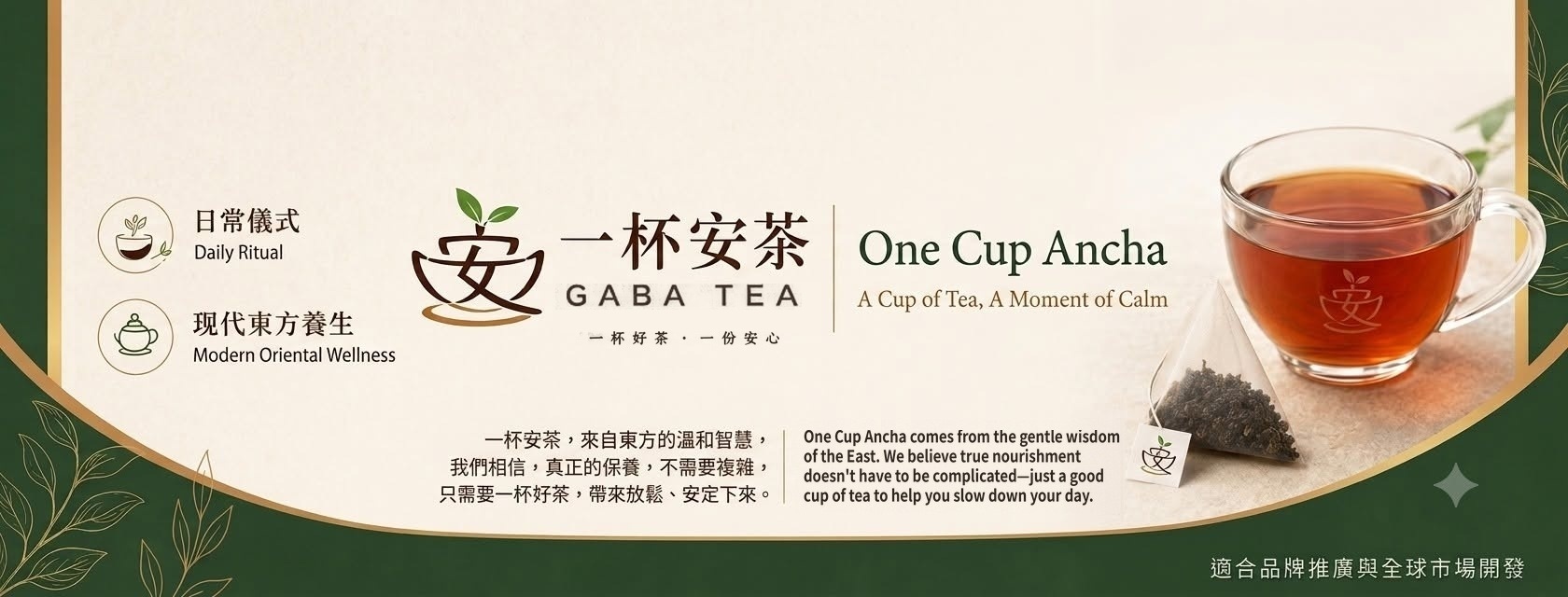
One Cup Ancha — Daily Ritual, Modern Oriental Wellness. A cup of tea, a moment of calm.
Food Business Registration No. N-202345250-00000-3
Product Liability Insurance No. 150215PD66370

What is GABA tea

An oxygen-free process lets the leaf build GABA naturally

GABA tea, also called Gabaron tea, is defined by its process: fresh leaves rest for a time in a nitrogen-filled or vacuum, oxygen-free environment, where the oxygen-deprived leaves transform and naturally accumulate a higher level of γ-aminobutyric acid (GABA), before finishing through the usual tea-making steps.

GABA (γ-aminobutyric acid) is an amino acid that occurs naturally in the body, and a neurotransmitter in the nervous system. Ordinary tea leaves already contain trace GABA; the oxygen-free process above raises that level markedly — and that is where the name comes from.

This is not a tea in a hurry; from process to flavour, it's all about waiting.

Origin

GABA tea's method traces back to Japanese tea research in the 1980s, when researchers found that leaves resting in an oxygen-free environment accumulate GABA. The approach was later adopted and developed by Taiwan's tea industry into a GABA tea with local terroir.

Content standard

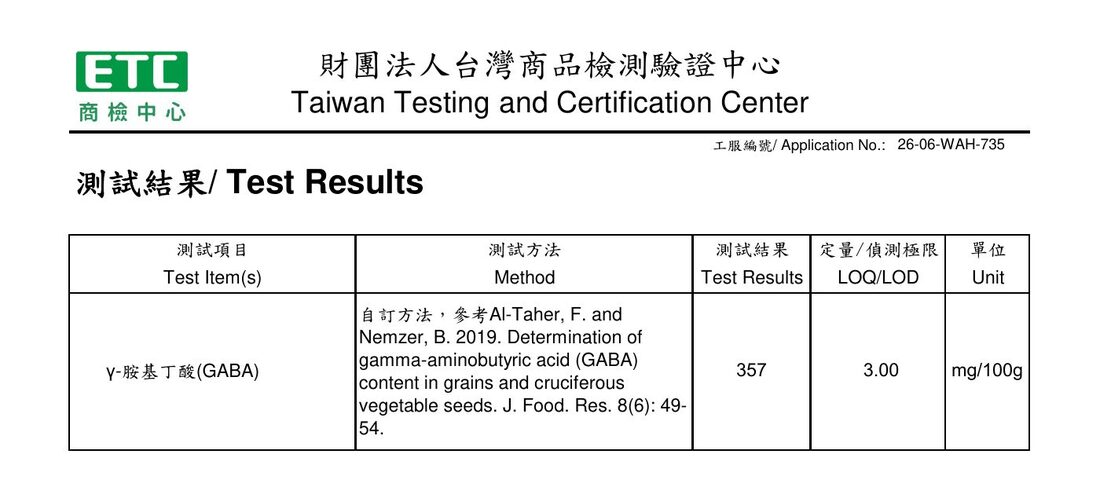
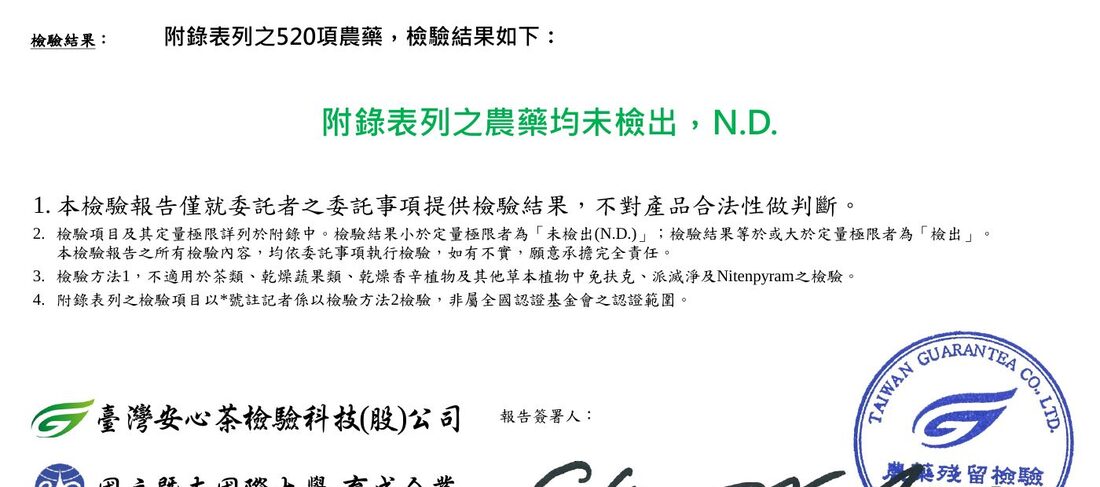
The industry commonly takes "at least 150 mg of GABA per 100 g of tea" as a reference standard for GABA tea; actual content varies by cultivar, process and batch. For the batch submitted for testing, the Taiwan Testing and Certification Center (ETC) measured 357 mg of GABA per 100 g (application no. 26-06-WAH-735, issued 29 June 2026); the batch also passed a 520-item pesticide-residue screen with none detected (N.D.). Results apply only to the samples tested and may vary between batches. Full reports can be opened below under "Test Reports".
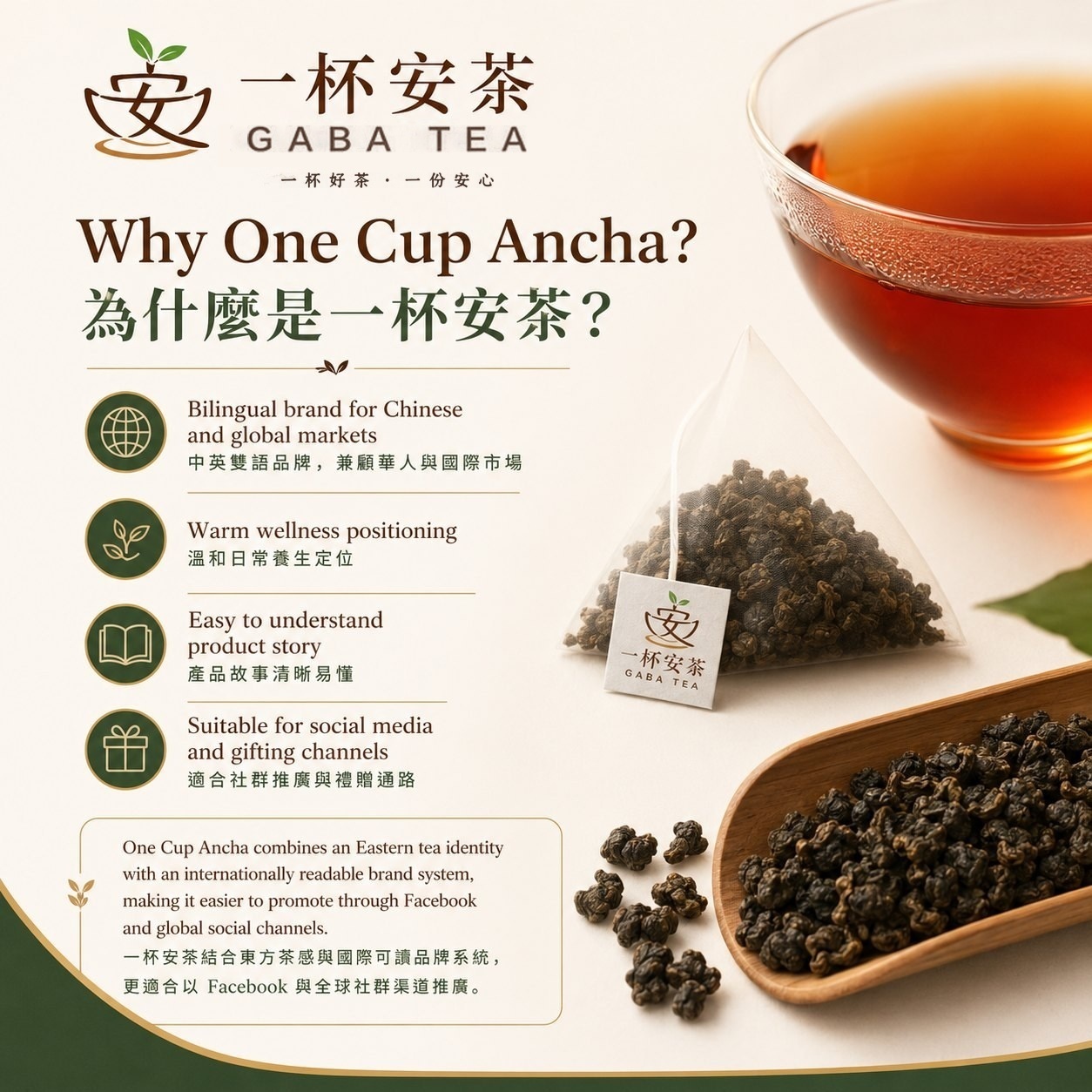
Why One Cup Ancha — bilingual brand for Chinese and global markets, warm wellness positioning, easy-to-understand product story, suitable for social media and gifting channels
357mg
GABA per 100g (tested batch)
Taiwan Testing and Certification Center · no. 26-06-WAH-735
All clear
Safety testing
520 pesticides — none detected (N.D.)

About GABA (background)

What GABA is, and why it draws interest

GABA (γ-aminobutyric acid) is an amino acid that occurs naturally in the body and the main "inhibitory" neurotransmitter in the nervous system — think of it as a "brake" that helps signals slow down. Our bodies produce GABA on their own, and it is also found in some fermented foods.

Because of this, GABA as a compound has long drawn interest in nutrition and food science, and there is a fair amount of public research and reporting on it; GABA tea (Gabaron tea) raises the leaf's GABA level through its oxygen-free process and is often introduced as a drink "naturally rich in GABA". To be honest about it: human research on GABA's effects is still developing and not yet conclusive, so this page is for general information only and makes no guarantee of individual health effects. Readers interested in GABA and health are encouraged to consult academic databases or the public information of authorities such as Taiwan's FDA.

What we can confidently say about this tea

  • 357 mg of GABA per 100 g for the tested batch — measured by a third-party laboratory
  • 520 pesticides, none detected (N.D.), with a full test report
  • Naturally rich in γ-aminobutyric acid (GABA) — from a distinctive process
  • Nitrogen-filled, oxygen-free resting fermentation — slow and laborious, no shortcuts
  • Gentle in flavour, with fruity acidity and a sweet finish — smooth, not bitter
  • No artificial flavourings — an easy, everyday drink
  • Brew with hot water to release GABA; add ice or chill after steeping — pairs well with many dishes and snacks
  • Ideal for moments when you want to slow down and relax
⚠ Note: the above describes product features and composition as general food information; it is not medical advice or a claim of efficacy. Under Taiwan's Act Governing Food Safety and Sanitation (Article 28), food may not be labelled or advertised with medical efficacy (e.g. lowering blood pressure, blood sugar or blood lipids, or treating or improving disease); violations may incur fines of NT$40,000 to NT$4,000,000.

To formally claim health benefits, the lawful routes are: (1) obtain "Health Food" certification (the "little green man" mark) from the Ministry of Health and Welfare and use the approved wording; (2) use only the approved phrases listed in the official guidelines (Appendix I "generally usable phrases" or Appendix II "physiological-function phrases for specific nutrients/ingredients"); (3) confirm specific wording with your local health authority or a professional first. Note also that an ordinary food's product name may not contain the word "health". If you have health concerns, please consult a physician or dietitian.
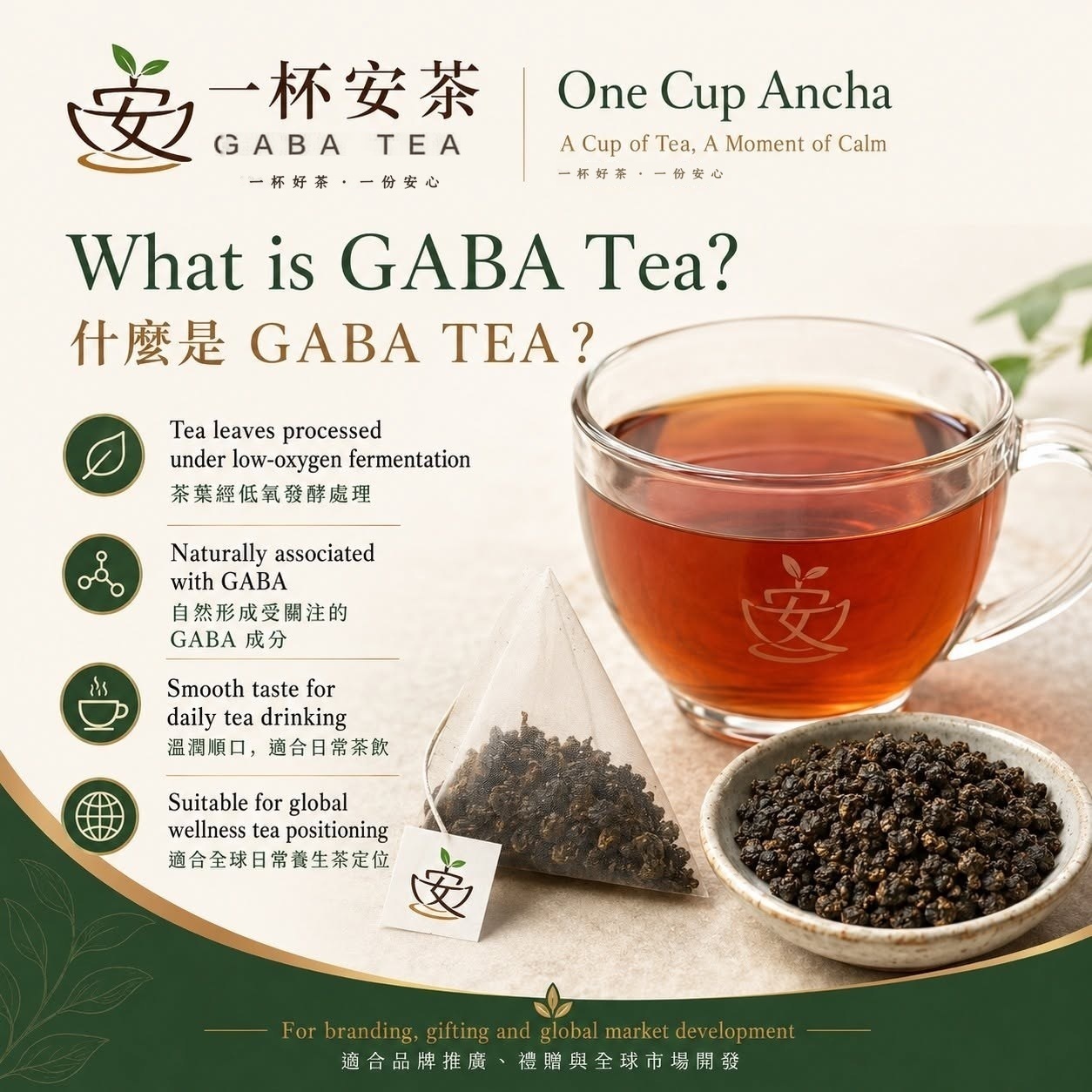
What is GABA Tea? Tea leaves processed under low-oxygen fermentation, naturally associated with GABA, smooth taste for daily tea drinking, suitable for global wellness tea positioning.

Third-party test reports

Every claim, on the record

* The above are third-party laboratory reports for the submitted samples; results apply only to the samples tested and may vary between batches. They are provided for reference and are not health or advertising claims. Click an item to open the full report.

Videos

GABA tea, explained on screen

* Videos are provided and embedded via YouTube (privacy-enhanced mode); they scale automatically on phone and desktop.

How it's made

The GABA tea process

01

Picking

Suitable fresh leaves are picked, ready for oxygen-free treatment.

02

Oxygen-free rest

Leaves rest for several hours in a nitrogen-filled or vacuum container, building GABA.

03

Tea-making

Then comes the usual withering, fermentation, rolling and drying.

04

Roasting

Roasted to taste, setting the calm fruity body and sweet finish.

Flavour & Brewing

How to enjoy it best

01

Taste

風味

Gentle fruity acidity, a calm aroma and a clear sweet finish — round and easy, never harsh.

02

Temperature

水溫

Use hot water, around 85–95°C — GABA tea must be brewed hot to release its GABA, so direct cold-brewing is not recommended.

03

Steeping

沖泡

Steep in hot water for 2.5 hours or more; one sachet per brew — no re-steeping. Afterwards, add ice or refrigerate for an iced drink — but do not cold-brew directly.

04

Pairing

搭配

Lovely with lightly sweet snacks like castella cake — ideal for a relaxed moment.

* GABA tea is still tea and contains caffeine (amounts vary by cultivar and brewing). This page introduces only its process, composition and flavour; human research on GABA is still developing, and no medical-efficacy claims are made.

Related research

What the literature says about GABA tea

The following summarises academic literature on GABA and GABA tea, for general reference only — it is not a claim about this product. Findings are not always consistent and mostly call for larger trials.

  • Process & compositionAnaerobic (e.g. nitrogen) processing can greatly raise leaf GABA — literature reports up to about 20×.
  • Blood pressure (animal & early human)Animal studies (salt-sensitive rats) link GABA-rich tea with lower blood pressure; a 28-day human GABA-oolong study examined diastolic blood pressure, relaxation brain waves and quality of life.
  • Relaxation & stressSome human studies report higher alpha brain waves, lower stress markers and improved heart-rate variability after drinking.
  • SleepReviews observe only a trend toward shorter time to fall asleep.
  • Scientific caveatThe absorption pathway, mechanism and effective dose of oral GABA are still under study.

Sources (academic literature):

  1. Anaerobic GABA accumulation in tea — J. Agric. Food Chem. · pubs.acs.org
  2. GABA-rich green tea & blood pressure (Dahl rats) — Am. J. Hypertens. · sciencedirect.com
  3. GABA oolong tea: diastolic BP, alpha waves & QOL (28-day human study) · ncbi.nlm.nih.gov
  4. GABA-fortified tea, HRV & stress (human cohort) · pmc.ncbi.nlm.nih.gov
  5. Oral GABA on stress & sleep — systematic review · ncbi.nlm.nih.gov

* The above summarises observations from academic literature; findings are not consistent and mostly need further research. These are regular food products — not certified health foods — and have not undergone Taiwan FDA health-food registration; no claim is made to treat or prevent any disease. Please consult a healthcare professional for health concerns.

FAQ

GABA Tea Q&A

What is GABA tea (Gabaron tea)?

GABA tea, also called Gabaron tea, is made by resting fresh tea leaves in a nitrogen-filled or vacuum, oxygen-free environment so they naturally accumulate a higher level of γ-aminobutyric acid (GABA), then finishing them through the usual tea-making steps. The method comes from Japanese tea research in the 1980s and was later developed by Taiwan's tea industry.

What tea is GABA TEA's Gabaron tea made from, and where is it grown?

Our GABA (Gabaron) tea is made on an oolong base from Lugu, Nantou, Taiwan. A nitrogen-filled, oxygen-free resting step is added during processing so the leaves naturally accumulate gamma-aminobutyric acid (GABA) — which is why it still drinks like a mellow oolong, with a gentle fruit acidity and a sweet finish.

How much GABA does this tea contain?

For the batch submitted for testing, the Taiwan Testing and Certification Center (ETC) measured 357 mg of GABA per 100 g (no. 26-06-WAH-735, issued 29 June 2026). The industry commonly uses 150 mg per 100 g as a reference standard. Results apply only to the samples tested and may vary between batches.

Is it tested for pesticide residues?

Yes. The batch passed a 520-item pesticide-residue screen by Taiwan GuaranTea with none detected (N.D.), report no. TA260521231. The full report can be opened on this page under Test Reports.

How should I brew GABA tea?

Put one tea bag (3 g) in about 350–500 ml of hot water at 85–95°C and let it steep for 2.5 hours or more. Each bag is for a single brew; do not re-steep. You can also fill a thermos in the evening and take it with you the next day.

Can GABA tea be cold-brewed?

Direct cold-brewing is not recommended — GABA tea must be brewed with hot water to release its GABA. After the hot steep, add ice or refrigerate it to make an iced tea.

Does GABA tea contain caffeine?

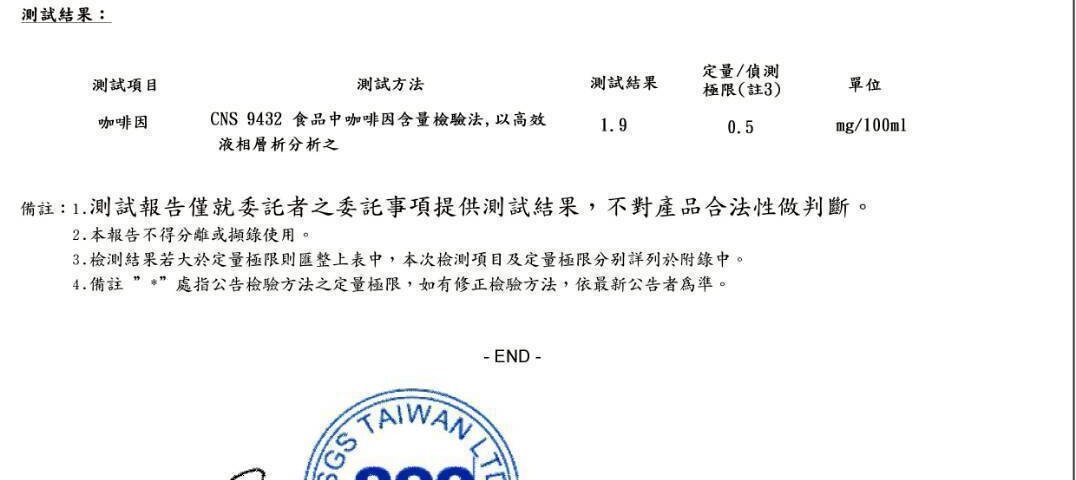
Yes. GABA tea is still tea and contains caffeine. SGS Taiwan measured 1.9 mg of caffeine per 100 ml for this product (report no. BA/2025/33114); actual intake depends on how you brew it.

Does GABA tea have health benefits?

We make no health or medical claims. This product is an ordinary food, not a registered health food, and human research on GABA is still developing and not yet conclusive. If you have health concerns, please consult a doctor or dietitian.

GABA TEA

Care to try a tea
brewed from waiting?